Scale houses that run themselves.
A scale house is a person paid to read a number and write it down. Aventyr automates that attendant function with the same vehicle identification and remote operators that run our security work, sends only the exceptions to a person, and builds the network that gets the data to your office in real time.
Four steps, no one typing.
Watch first. Automate last.
We start by learning how your scale desk runs today, and only automate what your team has signed off on.
Watch
A small device at the scale desk observes how your attendants run transactions in your existing scale software. Nothing changes for your team.
Document
What we saw becomes a written process guide. Your team reviews it and signs off before anything is automated.
Automate
Routine transactions run on their own. Anything unusual goes to an exception queue for a remote operator.
Fewer hands on the keyboard.
Plate and vehicle recognition
Licence plate capture with vehicle classification by type, make and colour. Carriers on a known list are handled automatically; anything unrecognised becomes an exception rather than a guess.
Ticketing without typing
The weight, the vehicle, the time and the product are captured together. Manual re-keying is where scale data goes wrong, and it is removed entirely.
Remote attendant
When a load genuinely needs a human, an operator takes it live with camera control and audio talk-down. One operator can cover several sites instead of one person sitting at each.
Site-to-site networking
Managed VPN between locations, including remote pits with no fixed line, so a scale kilometres from the office behaves like it is in the next room.
Data into your systems
Scale records delivered into the platform you already run, in real time, so dispatch, billing and inventory are working from the same numbers as the pit.
Security comes with it
The cameras doing the identification are the same cameras securing the site after hours, monitored from a ULC-certified centre. One deployment, two jobs.
A scale five kilometres away, on the same network.
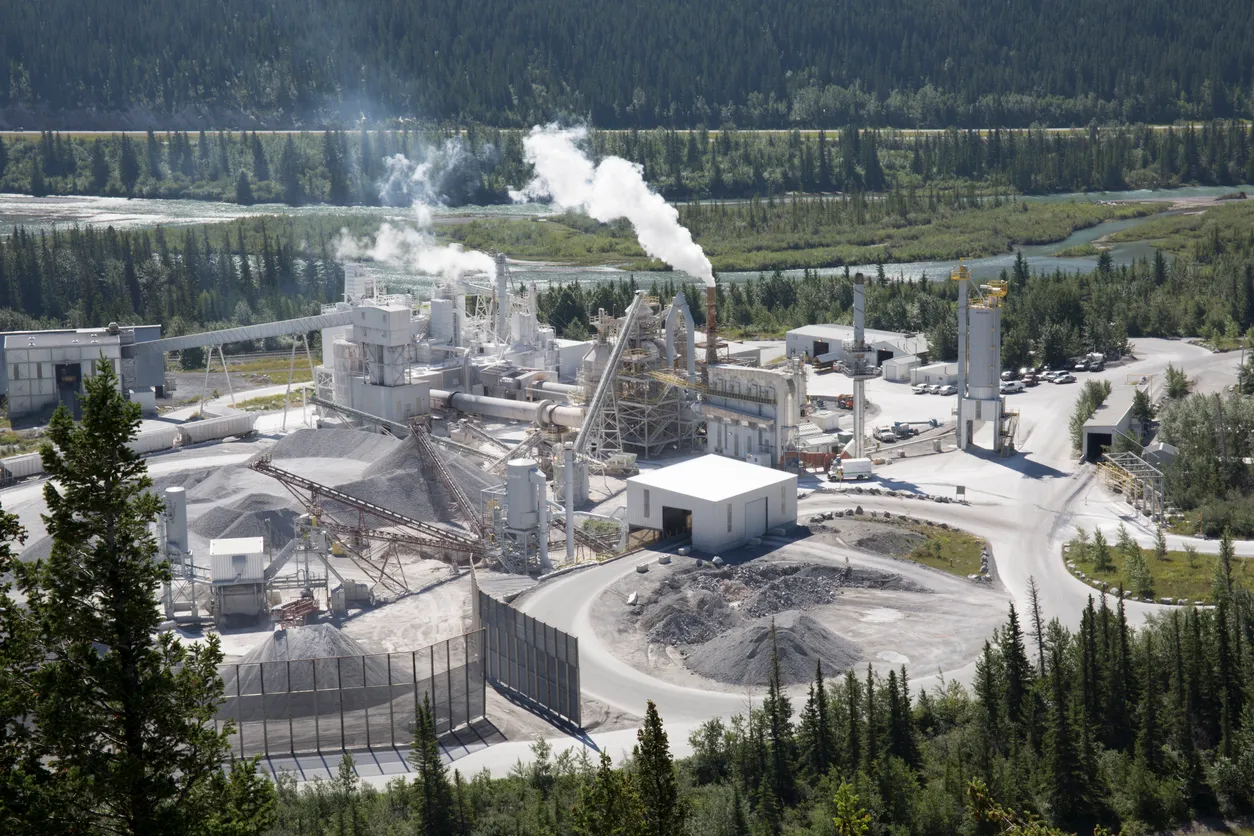
On a recent aggregates deployment the scale sits roughly five kilometres from the operation it reports to, with no carrier circuit between them. Aventyr built a site-to-site VPN across the two locations so scale data moves continuously rather than being collected and reconciled later. The vehicle identification, the exception handling and the security monitoring all ride the same link. From the office, the remote scale is simply another part of the network.
Automating the scale itself is the easy half. The reason most sites still run a person in the scale house is that the pit is somewhere with no fibre, patchy cellular and nobody local to fix it when the link drops. That problem is a network design problem, not a software one, and it is the part we take on.
Where this fits, and where it does not.
This works where the traffic is repetitive, the vehicles are known, and the attendant function is mostly recording rather than judging. It works less well where every load needs a physical inspection, where the product mix changes constantly, or where a regulator requires an attested human reading. If your site is the second kind, we will say so during the assessment rather than after the install.
What is under the hood.
Who Runs This Already